Context, already connected.
Bring the systems around a responsibility into one native app, so the next step begins with the right information.
We build native apps that turn your team’s scattered tools into a clear picture—and a considered next move.
Built around the tools
your team already uses.
Every handoff asks an engineer to connect the dots: the alert, the ticket, the code, the customer. A run-app carries those connections as software.
Bring the systems around a responsibility into one native app, so the next step begins with the right information.
Connect a failure to the service, deployment, and customer behind it. Make the operating question the center of the screen.
Put the details and confirmation beside the consequential decision. Build the safe path into the flow.
A bridge for an engineer. A cockpit for a service. Both built for ourselves first: Helmhouse runs its own fleet on the apps below.
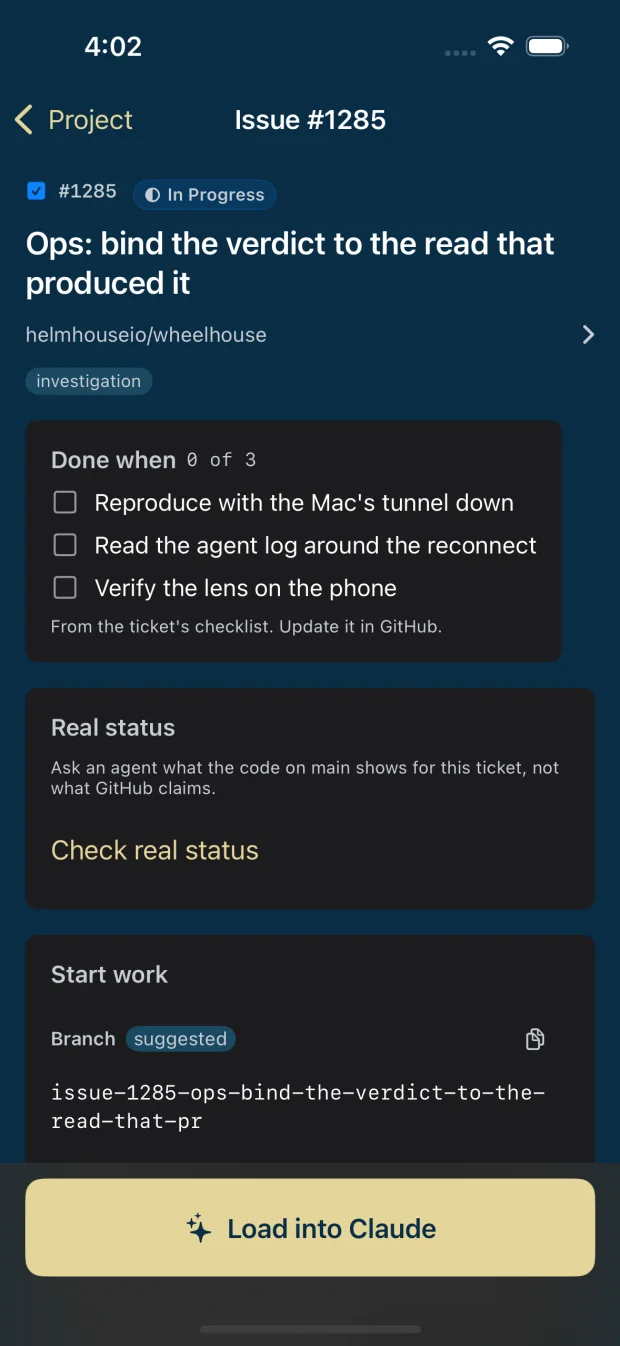
Wheelhouse joins a team’s issues, pull requests, monitoring, deployments and coding sessions in a native iPhone app. The reads run on the engineer’s own Mac. This is the instance our own team carries.
Our own engineering, on our own app. Existing app screens, sample data.
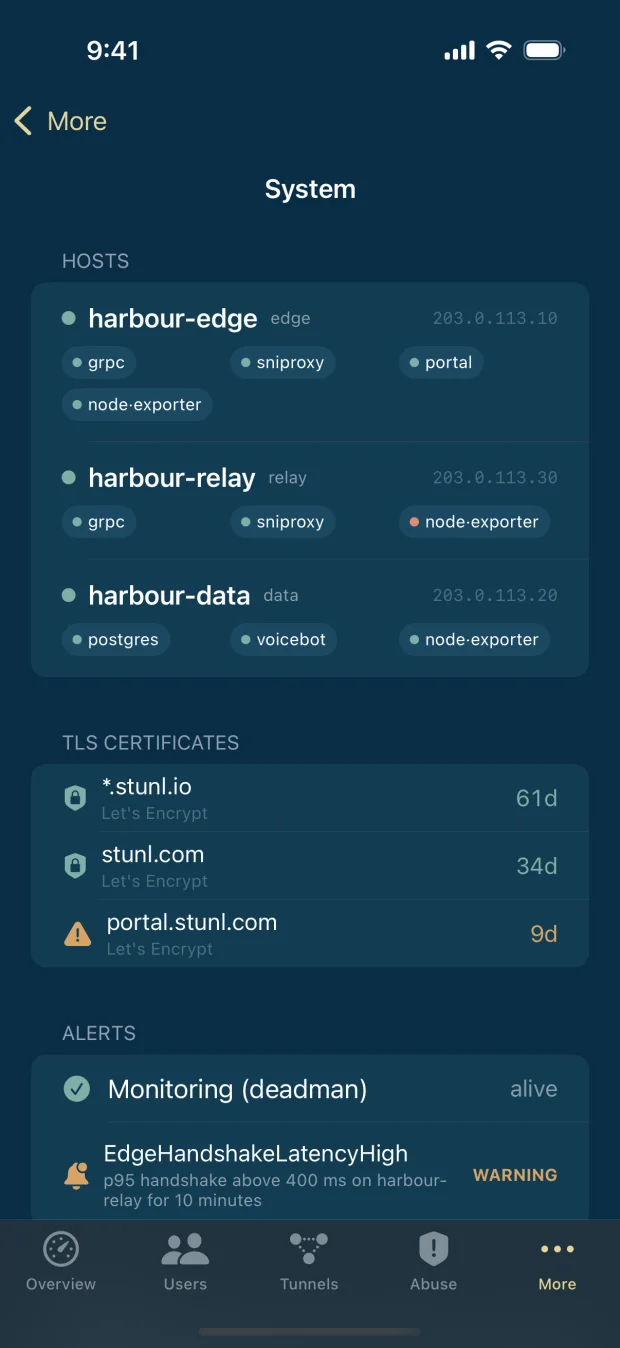
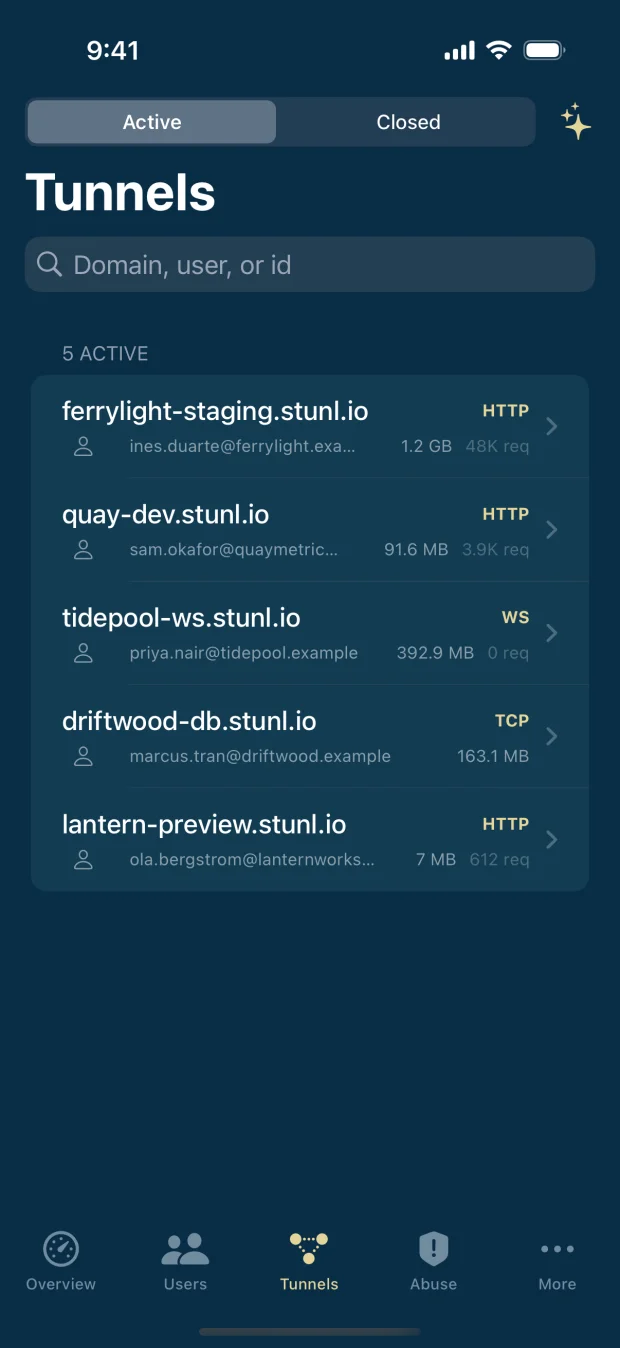
Built for the operators of STUNL, the tunnel service our fleet is reached through. STUNL Admin connects edge health, live tunnels, accounts, abuse reports and guarded actions over the service’s own admin API, straight from the phone.
The cockpit for a service we operate. Existing screens, sample data.
A focused engagement, built around the work that costs your team the most attention.
One service, its owner, and the moments that send them between tools. A runbook or a recent incident is a useful place to begin.
A clear operational problem
We map the systems, the decisions, and the trust boundaries. Together, we define the workflows worth building first.
A product direction, trust model, and scope
A native app shaped around the team’s actual work, including the waiting, failed-access, and recovery states they will meet.
Software for a responsibility you own
Your app’s trust model is part of its scope. We map the systems it reaches, where credentials live, and which actions need confirmation before we build.
In Wheelhouse’s Mac-mediated workflows, the credentials for issues, code, monitoring and deployment tools stay on the Mac. The relay carries encrypted, signed messages. The Mac needs to be awake and connected.
A service app can reach its systems directly, with credentials in its private Keychain and a VPN where needed. STUNL Admin holds one admin token and talks to one API; the architecture follows the service’s access requirements.
Optional phone-side AWS and VPN access has its own device-local trust boundary. We document the model for your team to review.
A bespoke native app for your team or a service you operate. Wheelhouse and STUNL Admin are the apps we run Helmhouse on, shown as examples of the practice. Your engagement is scoped around your systems, workflows, and access requirements.
The app connects the systems your team uses. We identify the APIs, permissions, local context, and integration work needed during scoping. Your systems remain the sources of record.
A service you own, a runbook, or a recent example of work that required too many handoffs. We will use it to discuss the operating questions, safe actions, and smallest useful scope.
Price and timing depend on the integrations, workflows, trust model, and distribution requirements. We define those with you and agree scope before the build. There is no generic seat-based package to select.
Start there. Tell us what your team owns and where the work gets stuck. We’ll start a conversation about the right first app.
contact@helmhouse.io